| Date | Venue | Language | Organizers |
|---|---|---|---|
| Friday, 6 – Sunday, 8 November 2026 | Taicang & Shanghai DianJi University | German/Chinese (Simultaneous Interpretation) | Shanghai DianJi University, City Government Taicang, Technical University of Applied Sciences Wildau |
Conference Registration: https://f.wps.cn/g/AKKFK4rM/
“The 2nd Sino-German Conference on Integration of Industry and Education (SGC-AI 2026) serves as a strategic platform to deepen cooperation between China and Germany in advanced manufacturing education. By integrating the strengths of German dual vocational training with China’s dynamic AI ecosystem, we are committed to cultivating highly skilled, interdisciplinary professionals who can navigate the transformation of the manufacturing industry in the age of Artificial Intelligence. Through close collaboration among universities, enterprises, and research institutions across the Shanghai-Taicang industrial corridor, we aim to bridge the gap from algorithmic innovation to the shop floor, and to establish a new paradigm for industry-education-research integration that empowers sustainable and responsible industrial development.”
Prof. Dr. Cheng CAI, Dean at SDJU
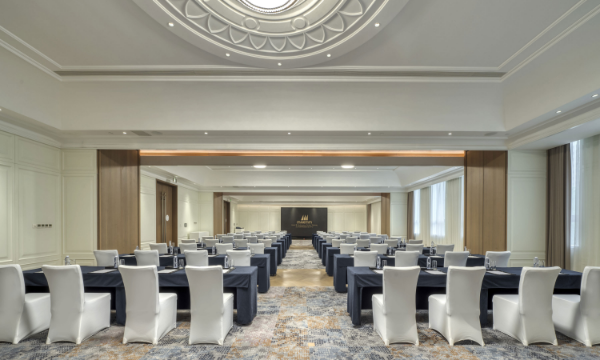
The 2nd Sino-German Conference on Integration of Industry and Education (SGC-AI 2026) pursues three strategic objectives: deepening the dialogue between German and Chinese manufacturing industry and science, discussing the transformation of workforce demand through Artificial Intelligence, and developing a new model for cooperative innovation among industry, higher education, and research
The conference serves not only as a platform for academic exchange but also as a driving force for the deep integration of industry, education, and research between our two countries.
The focus is on practical implementation: from algorithm research to the shop floor, from theory to dual vocational training – we aim to link German dual education with the dynamic Chinese AI ecosystem to train highly qualified, interdisciplinary professionals for Advanced Manufacturing.
As one of the most dynamic growth regions in the Yangtze Delta, Taicang, with its manufacturing companies and large Yangtze port, is a prime example of China’s economic and innovative strength.
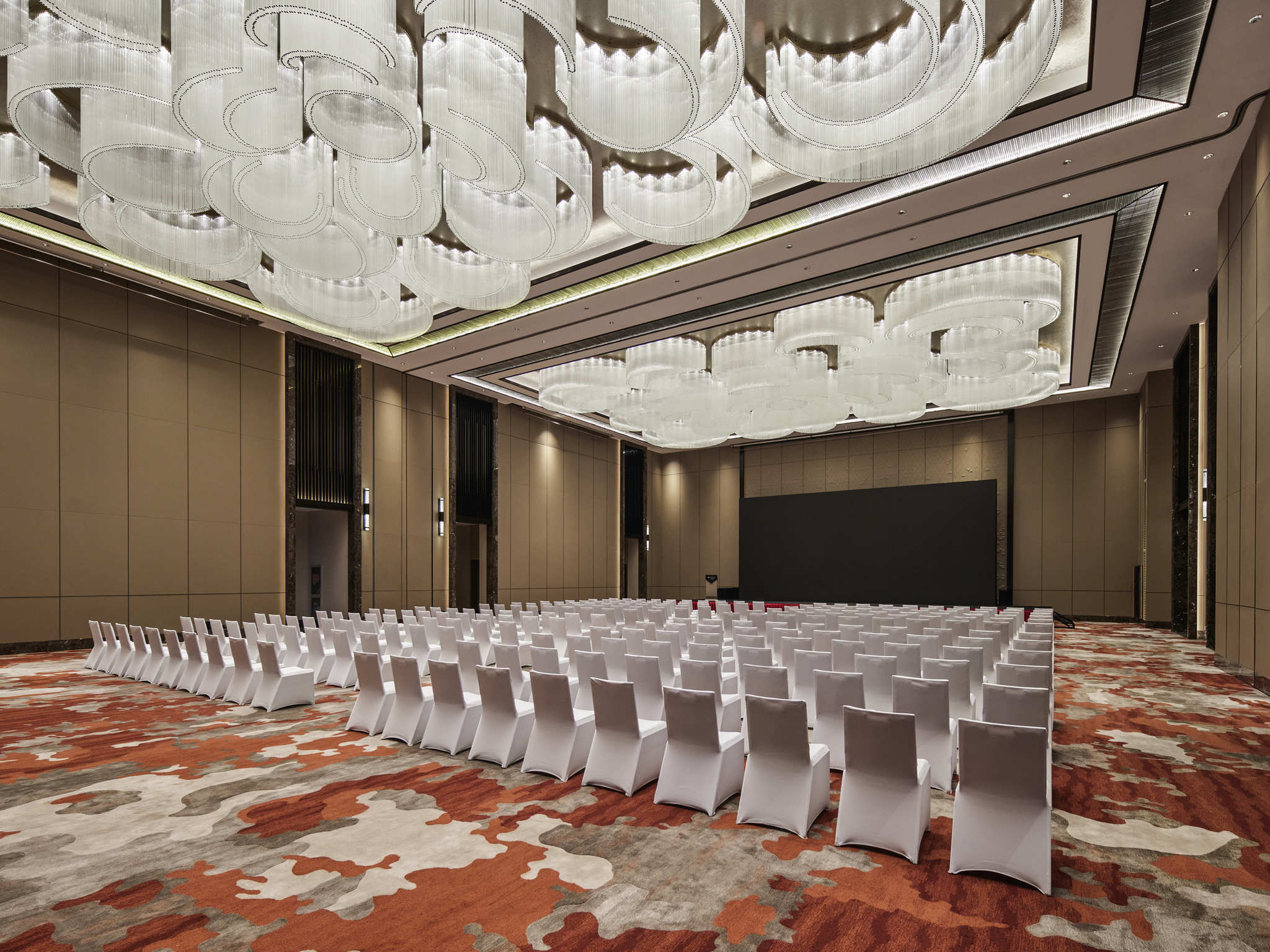
With over 560 established German companies, Taicang has a unique selling point: We particularly welcome German companies to participate in the program and will do our utmost to offer company visits, B2B cooperation exchange, and individual talks to initiate cooperation.
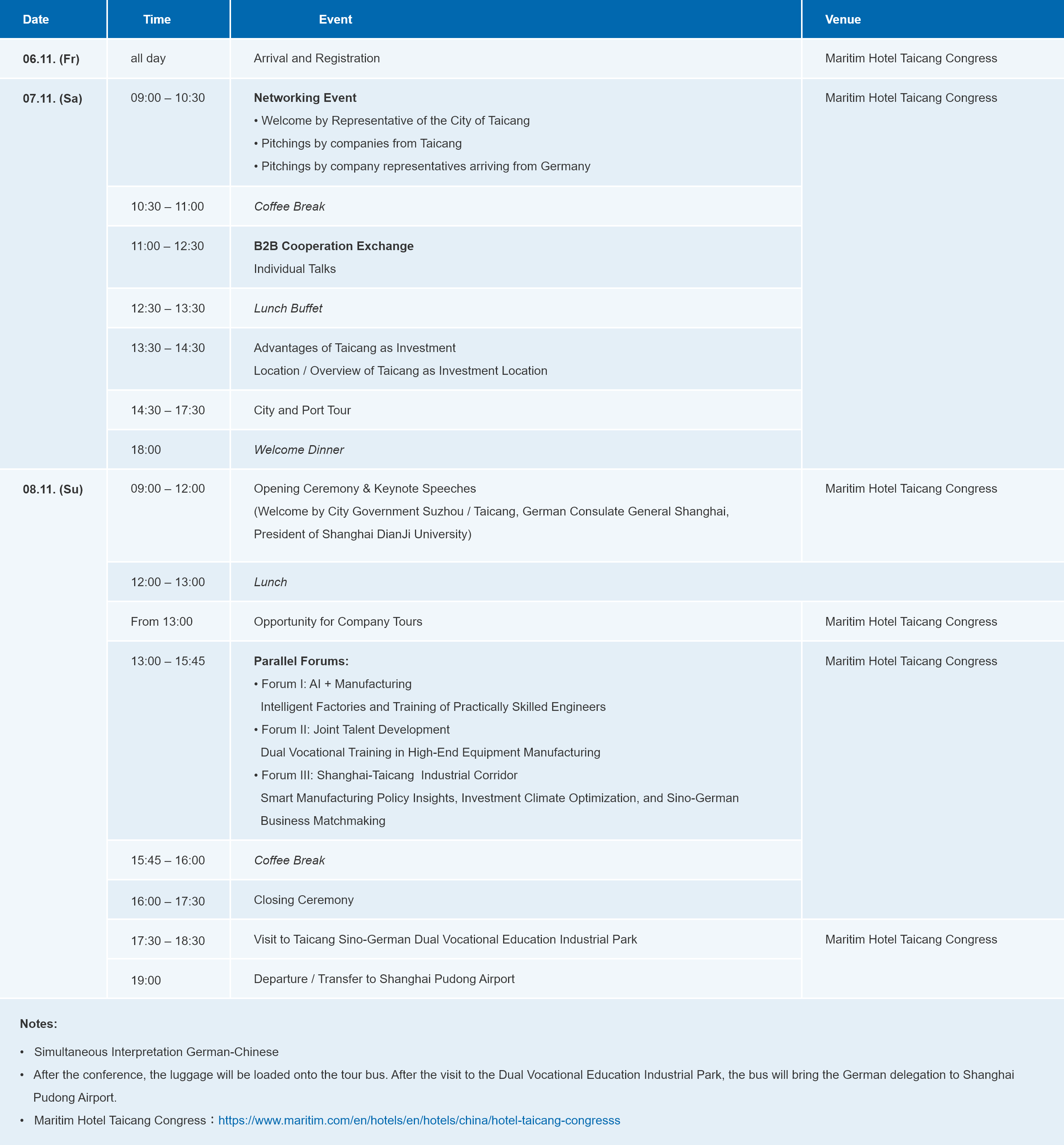
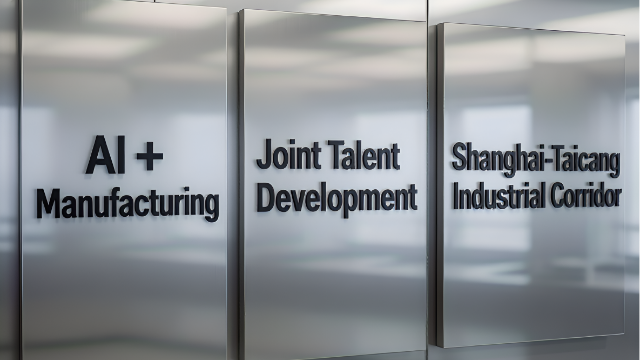
Forum I: AI + Manufacturing
Intelligent Factories and Training of Practically Skilled Engineers
Forum II: Joint Talent Development
Dual Vocational Training in High-End Equipment Manufacturing
Deadline for Abstract Submission: 31 July 2026
Notification of Acceptance: 15 August 2026
Deadline for Final Paper Submission: 30 September 2026
Conference: 08 November 2026
Abstract: max. 2 DIN A4 pages (Submission language: English)
• Template: github.com/chengcaisdju/SGC-AI-2026
• Submissions: https://www.smartchair.org/SGC-AI-2026/
Shanghai DianJi University
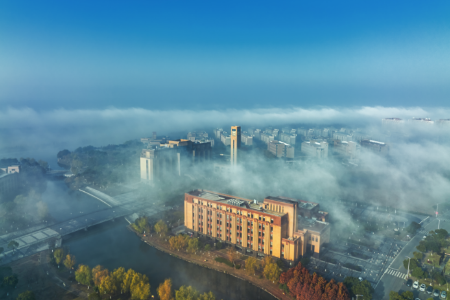
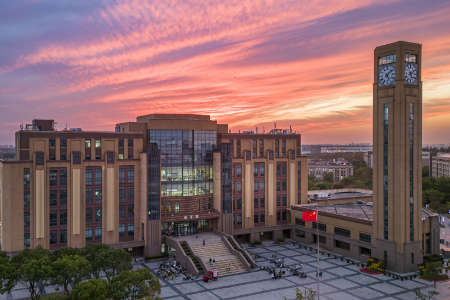
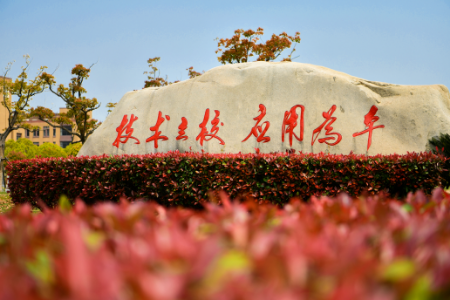
Shanghai DianJi University is an application-oriented university with a focus on engineering sciences, complemented by economics, management, humanities, arts, and natural sciences. Founded in 1953, the university has two campus locations in Lingang and Minhang with a total area of 80 hectares. Currently, over 15,000 students are enrolled, including more than 12,000 bachelor’s, over 2,800 master’s students, and over 200 international students. The teaching staff comprises over 1,100 employees, including approximately 900 full-time lecturers, over 600 dual-qualified teachers, and nearly 50 international academics. The university is organized into 17 faculties with 44 bachelor’s and 23 master’s programs. The engineering disciplines rank in the global Top 1% of the ESI Rankings. Research funding amounted to over 160 million RMB in 2025, with an average annual growth of 20%.
The university follows the guiding principle “Technology as Foundation, Application as Core” and concentrates on the regional key industries of intelligent manufacturing, energy equipment, integrated circuits, and aerospace. The faculties include the School of Electrical and Energy Engineering, the School of Intelligent Manufacturing and Robotics, the School of Aerospace Information Science and Technology, the School of Integrated Circuits, the School of Artificial Intelligence and Data Science, as well as the School of Materials Science and Engineering. The goal is to train highly qualified, practically skilled engineers with solid engineering practice, a pronounced spirit of innovation, and the ability to solve complex technical problems.
SDJU is intensively engaged in Sino-German cooperation and operates Kaiserslautern Intelligent Manufacturing School (Sino-German Cooperative Education Institution), the Sino-German Industry-Education Integration Center, and the Sino-German Exchange Center. Partner universities in Germany include the Technical University of Berlin, the Technical University of Dresden, the University of Applied Sciences Kaiserslautern, the Technical University of Applied Sciences Wildau, the University of Applied Sciences Munich, and the University of Applied Sciences for Technology and Economics Saarland. The university actively participates in projects for Sino-German integration of industry and education.
City Government Taicang
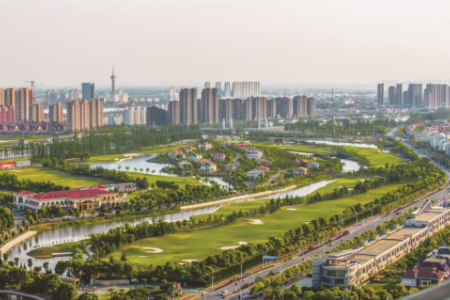
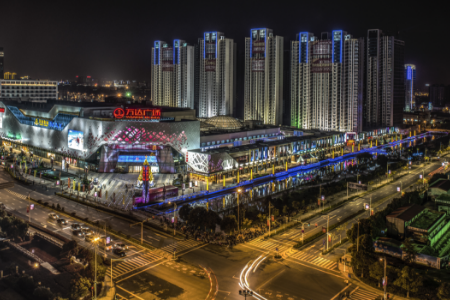

The county-level city of Taicang belongs to the city of Suzhou in Jiangsu Province. Taicang lies on the south bank of the Yangtze in immediate vicinity – approximately 50 km – to the metropolis of Shanghai and counts among the most dynamic growth regions in the Yangtze Delta. The city with 1.03 million inhabitants extends over 810 square kilometers. The port of Taicang is the largest port on the Yangtze, the eighth largest in China, and ranks 20th worldwide. In 2025, 8.736 million TEU were handled; the share in national automobile exports amounts to 12.7%. The port has the largest Ro-Ro terminal for motor vehicles on the Yangtze. The regional gross domestic product amounted to 193.5 billion RMB in 2025; the production values of regulated industry exceeded 300 billion RMB with 12,000 industrial enterprises, including 1,800 with foreign participation.
German companies setting up business in China particularly like to do so in Taicang, the “Home of German Companies.” In 2008, Taicang was appointed as the only city in China by both ministries of economics – the Chinese Ministry of Commerce and the German Federal Ministry of Economics and Technology – jointly as the “Sino-German Business Cooperation Base.” Later followed the designation as the first “Sino-German Cooperation Demonstration Zone for SMEs” by the Chinese Ministry of Industry and Information Technology.
Currently, over 560 German companies are based in Taicang, with a total investment of over 6 billion US dollars and an annual industrial production value of over 65 billion RMB – one third of the city’s total annual industrial production value. Six of the ten largest German machine tool manufacturers (including Trumpf, Chiron, and Emag) have settled in Taicang; likewise 18 of the world’s 40 leading automotive suppliers. More than 60 German “Hidden Champions” are active here. The flagship company Schaeffler has expanded its investment through 13 capital increases to over 10 billion RMB. The Beumer Group, as the 500th German company in Taicang, built its only Chinese full-range production site within one year after contract signing.
In Taicang, there is one of the three German Centres existing in China. The city has established a “1+7+N” overseas contact network (with seven contact points in Munich, Frankfurt, among others) and founded a Taicang Innovation Center in the German Rhine-Neckar region. The first AHK Academy in China (DIHK-certified) as well as 20 dual vocational training centers have so far trained over 10,000 skilled professionals. The Sino-German Dual Vocational Education Industrial Park extends over 320,000 square meters.
German lifestyle is omnipresent: Rothenburg Street in Bavarian architectural style, the Maritim Hotel as a German premium business hotel, and the annual Taicang Beer Festival. FC Bayern Munich operates a football school with exhibition center in Taicang; the Beethoven Art Season with Sino-German choir festival is firmly established. Jürgen Häring, the first foreign expert in Taicang, was honored with the Chinese Government Friendship Award.
Technical University of Applied Sciences Wildau
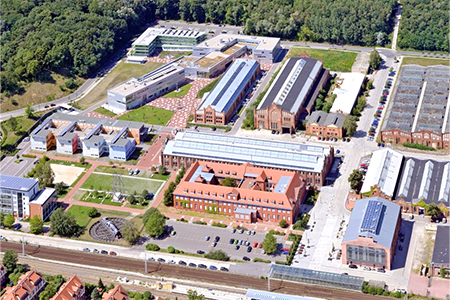
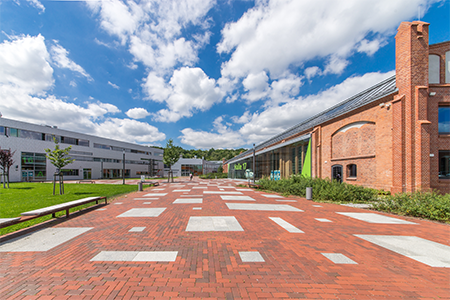
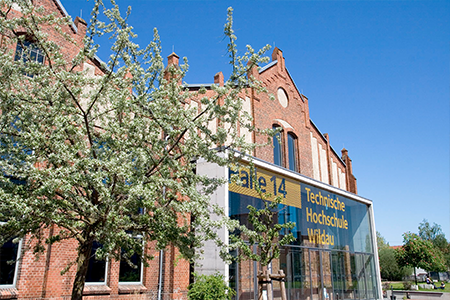
Technische Hochschule Wildau - Technical University of Applied Sciences Wildau (TH Wildau) is one of the leading universities of applied sciences in the German Berlin-Brandenburg metropolitan region, combining practice-oriented education with applied research and innovation. Located just south of Berlin, the university provides an interdisciplinary learning and research environment for approximately 3,400 students enrolled in engineering, business, administration, law, and natural sciences programs. Our degree programs combine scientific fundamentals with practical application and specifically prepare students to address current social challenges.
TH Wildau employs around 500 staff members, including more than 90 professors, and is committed to addressing societal challenges through research, technology transfer, and international collaboration. Its research activities focus on key areas such as sustainable mobility and logistics, digital transformation, future-oriented manufacturing, photonics and sensor technologies, artificial intelligence, and public administration. We have defined three socially relevant focus areas to which we contribute solutions: Future-proof mobility: Thinking up and developing new ways of getting around – sustainable, connected, inclusive. Effective administration: A testing ground for digital, transparent and citizen-oriented administration. Sustainable value(s) creation: Developing and testing technical, social and ecological innovations in realistic contexts. Close cooperation with industry, public institutions, and research organizations ensures that scientific results are rapidly translated into practical applications.
Internationalization is a core element of TH Wildau’s strategy. The university maintains partnerships with more than 80 higher education institutions in over 60 countries, fostering student and staff mobility as well as joint research and innovation projects. With its modern campus, excellent laboratory infrastructure, and strong emphasis on interdisciplinary collaboration, TH Wildau offers an inspiring environment for education, research, and international cooperation. As an entrepreneurial university, it actively promotes innovation, knowledge transfer, and sustainable development at both regional and global levels.
Contact: international@sdju.edu.cn
“Tai” “cang”:
A “magnificent” (“Tai”) place worth investing (“cang”) in
Home of German Companies in China
Welcome to Visit and Invest

 Taicang Invest.pdf